
"arabica branching"
2000 article(s) found

How should coffee trees be planted? can Arabica coffee trees survive at low elevations?
Coffee trees grow in the tropics between Tropic of Cancer and Tropic of Cancer and near the equator. There are also great differences in appearance among the so-called world coffee growth zones, caffeine varieties and regional factors. With long green leaves ranging from yellowish green to dark green or even brass, these shiny trees are wavy, which is more pronounced in Robasda than in Arabica. Although coffee trees need

Large-grain coffee and small-grain coffee Yunnan small-grain coffee is small-grain coffee?
Professional coffee knowledge exchange more coffee bean consultation Please pay attention to the coffee workshop (Wechat official account cafe_style) Coffee beans are divided into three main categories: small-grain Arabica, medium-grain Robsta and large-grain Liberica large-seed coffee, also known as Liberika seed, is an evergreen tree. The plant is tall, more than 10 meters high, the branches are thick and hard, grow obliquely upward, and the branches

Three original species of coffee Arabica,Robusta,Liberica
The small seed species of the three original species of coffee are Arabica, the medium grain species are Robusta, and the large grain species are Liberica family and genus: Rubiaceae Coffea small seed also known as Arabian species, medium seed species also known as Robsta species, and large seed species also known as Liberika species, there are mainly two common species: Arabica and Robusta. Coffee is rich in protein, fat, sucrose and lake.
The process of planting and picking Coffee basic knowledge of Coffee
The first people to drink coffee lived in Ethiopia. A drink called Buncham was found in the Arab scientific literature of 900-1000 AD, but it is not certain that it is coffee. These documents mainly record the scientific value of this bean called Buncham. In addition to introducing the protective effects of this drink on the stomach, organs and skin, the author also mentioned that it can make

Colombia Santa Rita Estate Coffee Bean Growing Information Flavor Description Characteristics Cultivated Varieties
Professional barista exchanges, please pay attention to coffee workshop (Weixin Official Accounts cafe_style ) Colombia coffee varieties are mainly small coffee. Plants are small trees or large shrubs, 5-8 meters high, usually multi-branched at the base; old branches are gray, nodes expand, young branches glabrous, compressed. Leaves thinly leathery, ovate-lanceolate or lanceolate, 6-14 cm long, 3. 5 -5 cm wide, apex long acuminate,

The skills of planting and harvesting Coffee the growth status of coffee trees
The first people to drink coffee lived in Ethiopia. A drink called Buncham was found in the Arab scientific literature of 900-1000 AD, but it is not certain that it is coffee. These documents mainly record the scientific value of this bean called Buncham. In addition to introducing the protective effects of this drink on the stomach, organs and skin, the author also mentioned that it can make

Sweet Santa Rita Manor, Colombia, the cultivation of boutique coffee beans, geographical location, climate, simple altitude.
The main varieties of Colombian coffee are small grains of coffee. Plants are small trees or large shrubs, 5-8 m tall, usually much branched at base; old branches gray-white, nodes dilated, young branches glabrous, compressed. Leaves thinly leathery, ovate-lanceolate or lanceolate, 6-14 cm long and 3.5-5 cm wide, tip long acuminate, acuminate part 10-15 mm long, base cuneate or slightly obtuse, rarely rounded, entire or

A brief introduction to the planting situation, geographical location, climate and altitude of fine coffee beans in Huilan, Colombia
Indians have lived on this land since ancient times. It was colonized by Spain in 1531 and gained independence in 1819. It was renamed in 1886 to commemorate Columbus, the discoverer of the American continent. Colombia has beautiful mountains and rivers, beautiful scenery, pleasant climate, spring all year round, fresh air and refreshing air. Walking in the streets of Bogota, the capital, feeling light

Where does the mocha name come from? what are the seeds of coffee beans?
1. With regard to mocha, there is indeed coffee from the port of Mocha, which is generally a native variety from Ethiopia. At this time, mocha can be understood as a native variety of coffee beans that grew in Ethiopia and then exported in the port of Mocha! PS: there are many native species here, mainly Ethiopian coffee beans, although many coffee beans have been found.

Flavor Description of Colombia Snow Peak Coffee Bean Features Elevation
Colombia Xuefeng Coffee Bean Flavor Description Characteristics Altitude To really understand the flavor changes and product differences of coffee beans is to understand the place of production and growers, different flavors of different estates, or different flavors of different hills in the same estate. The story behind each coffee bean is what Coffee Fragrance wants to know... which plot of land can be traced back to which estate the beans came from, or

Arabica coffee beans mature from June to August.
Every winter (dry season) is the harvest period of coffee beans, coffee trees after three to four years of growth, gradually mature, began to bear fruit, fruit next to the branches arranged in a string or cluster. Coffee beans wrapped in red skin inside, as soon as red can be picked. Most Arabica beans mature between June and August, and Roberto beans between September and October. Therefore,

Coffee varietology, it is impossible to know only Arabica-what varieties did Arabica evolve?
Professional coffee knowledge exchange more coffee bean information Please follow the coffee workshop (Wechat official account cafe_style) when it comes to coffee varieties, what everyone blurts out is Arabica, but in fact Arabica is only a very general classification, in fact, there are many branches below, let's have a small coffee variety class! Three original species of coffee: Arabica and Robbins

Description of Grinding scale Flavor of Columbia Nana Linglong Coffee Bean introduction to the Origin of Manor varieties
The main varieties of Colombian coffee are small grains of coffee. Plants are small trees or large shrubs, 5-8 m tall, usually much branched at base; old branches gray-white, nodes dilated, young branches glabrous, compressed. Leaves thinly leathery, ovate-lanceolate or lanceolate, 6-14 cm long and 3.5-5 cm wide, tip long acuminate, acuminate part 10-15 mm long, base cuneate or slightly obtuse, rarely rounded, entire or
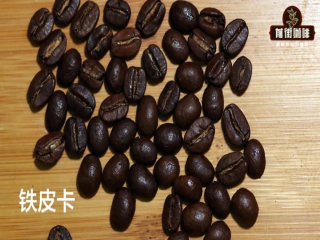
The story and characteristics of iron pickup coffee beans are there any varieties of iron pickup coffee that belong to Arabica?
Typica is one of the most iconic coffee varieties in the world. It can be traced back to the birthplace of Arabica coffee in Ethiopia and is essential for understanding the coffee we drink today. Its sensitivity to diseases and insect pests makes it an unpopular choice. However, consider its

How to distinguish the types of coffee beans and the appearance characteristics of Tebbon coffee beans
Professional coffee knowledge exchange more information about coffee beans Please follow the front street of coffee workshop (Wechat official account cafe_style)-bourbon Coffee there are hundreds of kinds of coffee in the world, and 70% of the coffee is grown in Arabica. Although Arabica is more vulnerable than Robusta, its flavor and aroma are more popular with consumers, and it is popular in boutique and commercial markets.

Arabica mutant iron skin card raw bean, how to taste blue mountain, Yunnan small grain iron skin card kind flavor
For professional baristas, please follow the coffee workshop (Wechat official account cafe_style) Arabica species (scientific name CoffeeArabica). The origin of Arabica species is Ethiopia's Abyssinia Plateau (present-day Ethiopian Plateau). In the early days, it was mainly used as medicine, and the habit of baking and drinking was developed in the 13th century.

Flavor Description of Colombia Coffee Bean Grind Scale Variety Treatment Taste Introduction
Flavor Description of Colombia Coffee Bean Grind Scale Variety Treatment Taste Introduction Colombia coffee varieties are mainly Arabica coffee. Plants are small trees or large shrubs, 5-8 meters high, usually multi-branched at the base; old branches are gray, nodes expand, young branches glabrous, compressed. Leaves thinly leathery, ovate-lanceolate or lanceolate, 6-14 cm long, 3. 5 -5 cm wide, apex long acuminate, acuminate

A brief introduction to the description of the flavor, taste and aroma characteristics of boutique coffee beans in Santa Rita Manor.
The main varieties of Colombian coffee are small grains of coffee. Plants are small trees or large shrubs, 5-8 m tall, usually much branched at base; old branches gray-white, nodes dilated, young branches glabrous, compressed. Leaves thinly leathery, ovate-lanceolate or lanceolate, 6-14 cm long and 3.5-5 cm wide, tip long acuminate, acuminate part 10-15 mm long, base cuneate or slightly obtuse, rarely rounded, entire or

Difference between Ugandan robusta coffee beans and Arabica beans _ classification of Ugandan coffee beans
Professional coffee knowledge exchange more coffee bean information please pay attention to the coffee workshop (Wechat official account cafe_style) "Arabica" vs. "Robsta" Arabica v.s Arabica beans are longer and oval in the middle of the split line narrow and tortuous. Romstadou is more circular in the middle of the split line crack into a straight line. Robustas Romsta coffee c

A brief introduction to the History and Culture of the Origin and Development of Fine Coffee beans in Santa Rita Manor
The main varieties of Colombian coffee are small grains of coffee. Plants are small trees or large shrubs, 5-8 m tall, usually much branched at base; old branches gray-white, nodes dilated, young branches glabrous, compressed. Leaves thinly leathery, ovate-lanceolate or lanceolate, 6-14 cm long and 3.5-5 cm wide, tip long acuminate, acuminate part 10-15 mm long, base cuneate or slightly obtuse, rarely rounded, entire or